A scaffolded journey toward COTAP's three professional roles — Caring Cultivator of All-round Growth, Inspirational Co-Constructor of Knowledge, and Committed Role Model of Professionalism — grounded in eight weeks of shadowing, tutoring, and ethical reflection at Munsang College Primary Section.
The Committee on Professional Development of Teachers and Principals (COTAP) sets three professional roles for Hong Kong teachers: Caring Cultivators of All-round Growth, Inspirational Co-Constructors of Knowledge, and Committed Role Models of Professionalism. Pre-service training and practice have grounded me firmly in the first two.
I design student-centred lessons with project-based learning and digital tools, making abstract concepts accessible and meaningful for diverse learning styles (Bruner, 1960).
Two years of voluntary tutoring for underprivileged and newly arrived students have sharpened my ability to provide academic and emotional support, helping marginalised learners navigate Hong Kong's education system with growing confidence.
Curriculum leadership, facilitative skills for professional learning communities, and structured reflective habits — these need deliberate development before I can fully embody this role.
My competence as a Committed Role Model of Professionalism, however, needs deliberate development in two interconnected areas. First, I lack the curriculum leadership skills and systems-thinking required for school-based curriculum design (Marsh et al., 1990). Second, I have not yet cultivated the facilitative skills and intellectual courage to contribute meaningfully to professional learning communities (PLCs) (Hargreaves & O'Connor, 2018). I recognise that these gaps partly reflect the structure of pre-service training, which often isolates coursework from the systemic, collaborative realities of school life. Underpinning both gaps is a superficial reflective habit — I keep descriptive journals without a structured framework linking practice to theory (Gibbs, 1988; Schön, 1983).
To close these gaps, I must develop the attributes of initiative, intellectual humility, and reflective discipline.
During block practice, co-design materials and cross-disciplinary themes with the panel team — shifting from lesson-level to system-level thinking (Marsh et al., 1990).
Design and lead a sharing session on digital tools for differentiated instruction, making my pedagogical reasoning publicly visible and open to critique (Hargreaves & O'Connor, 2018).
Weekly reflections plus fortnightly mentor calibration — turning experience into evidence-based learning, anchored by the EDB Guidelines on Teachers' Professional Conduct (2022).
Through this scaffolded approach, I will progressively embody the COTAP Committed Role Model standard.
My emerging teacher identity seamlessly integrates Caring Cultivator and Inspirational Co-Constructor strengths while intentionally growing into a Committed Role Model of Professionalism. My inclusive pedagogy and empathetic care foster a psychologically safe and supportive environment grounded in an ethic of care (Noddings, 2005). Targeted professional growth will enable me to model reflection and contribute to school development and wider professional culture.
My mission is to empower every student to thrive as an empathetic, critical-thinking lifelong learner and active citizen, echoing Hong Kong's whole-person development aims (CDC, 2001).
Empower every student to thrive as an empathetic, critical-thinking lifelong learner.
As a pre-service teacher, discovering a private student social media group where a classmate's photo is posted without consent — alongside derogatory comments — creates a profound ethical dilemma. My core duty is to protect student well-being while upholding ethical standards and maintaining professional integrity.
Safety, dignity, and privacy protection.
Fair treatment and the opportunity for moral learning.
A healthy peer culture free from harmful norms.
Sustaining a safe and respectful learning environment.
The tension lies between the immediate duty to stop bullying and support the victim, and the obligation to respect students' privacy and preserve teacher–student trust — without which future issues may be hidden or escalate silently.
I unequivocally prioritise the victim's safety and emotional well-being above all else. Cyberbullying's long-term harms — anxiety, depression, academic disengagement — are well-documented (Kowalski et al., 2014) and outweigh privacy and trust concerns. Therefore, I will act discreetly.
Confidential space, genuine concern, and immediate referral to the school counsellor.
With class teacher and counsellor, help them grasp the impact of their actions.
Turn the incident into a preventive, educational moment for all — including bystanders.
This empowers the victim, transforms bystanders into allies, and offers offenders a path to repair harm through understanding. I recognise that prioritising the victim may temporarily disadvantage the offending students, unsettle some bystanders, and cause the school institutional discomfort as private misconduct becomes formal; however, the victim's safety, the offenders' moral learning, and the school's safe culture together demonstrate why this approach replaces destructive silence with accountable, restorative dialogue benefiting every stakeholder long-term.
This response aligns with the Guidelines on Teachers' Professional Conduct (Education Bureau, 2022).
Requires a safe learning environment and immediate reporting of bullying; the victim's safety and dignity are paramount.
Demands responsible handling of personal data. By not revealing how I accessed the group and addressing the matter privately, I respect all parties' privacy while confronting harmful behaviour.
Emphasises whole-person guidance — using the incident as a teachable moment fosters positive values.
A restorative approach, rather than a purely punitive one, is more effective in reducing re-offence and repairing relationships (Morrison, 2006). I privilege the victim's interests because the threat of emotional harm outweighs the offenders' entitlement to unscrutinised privacy and the bystanders' comfort in avoiding confrontation. This decision protects the wider school community from a toxic online culture, safeguarding the most vulnerable. Guided by non-maleficence and an ethic of care (Noddings, 2005), this balanced course protects the victim, educates the perpetrators, and strengthens a culture of care — demonstrating professional integrity and ethical leadership.
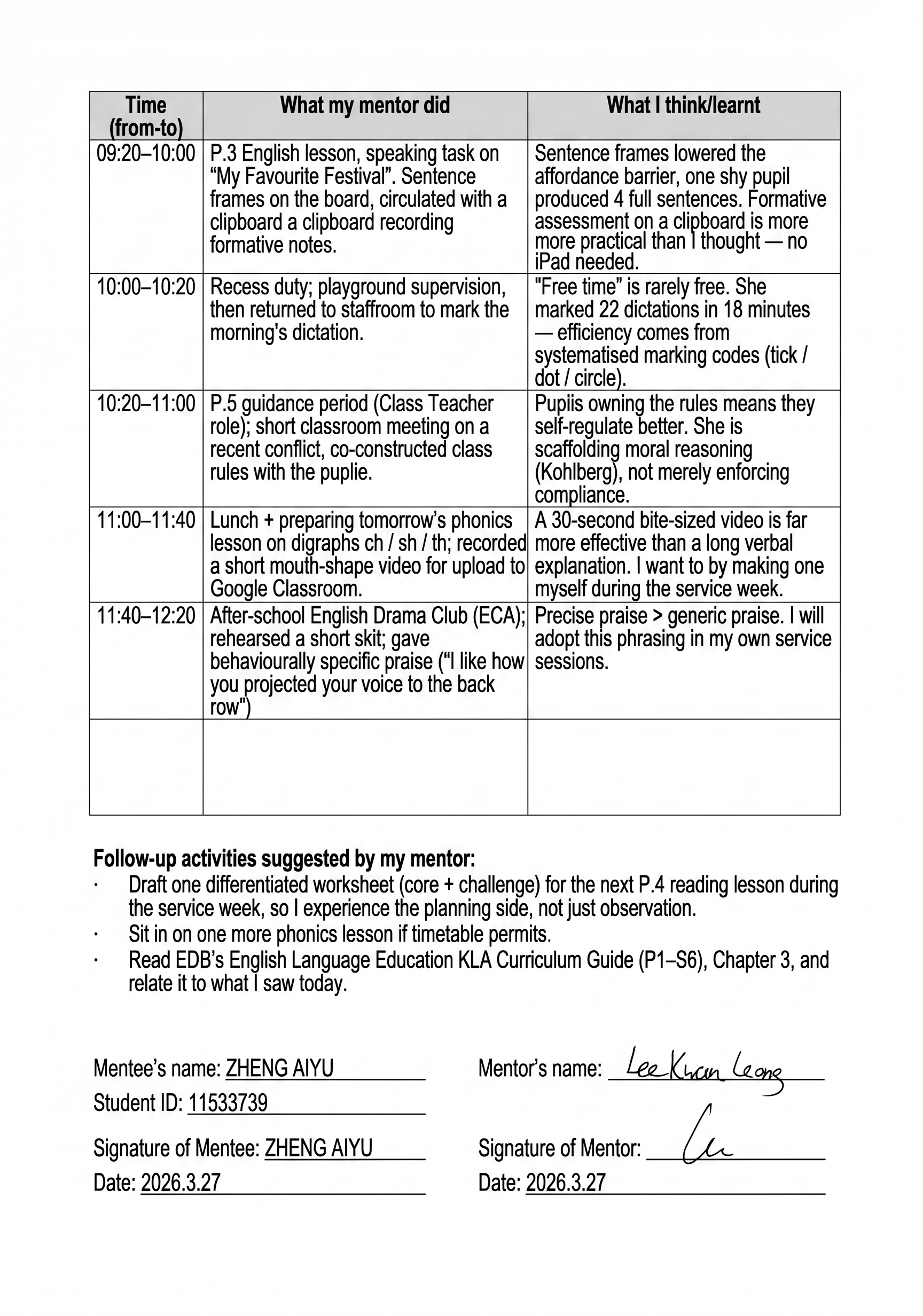
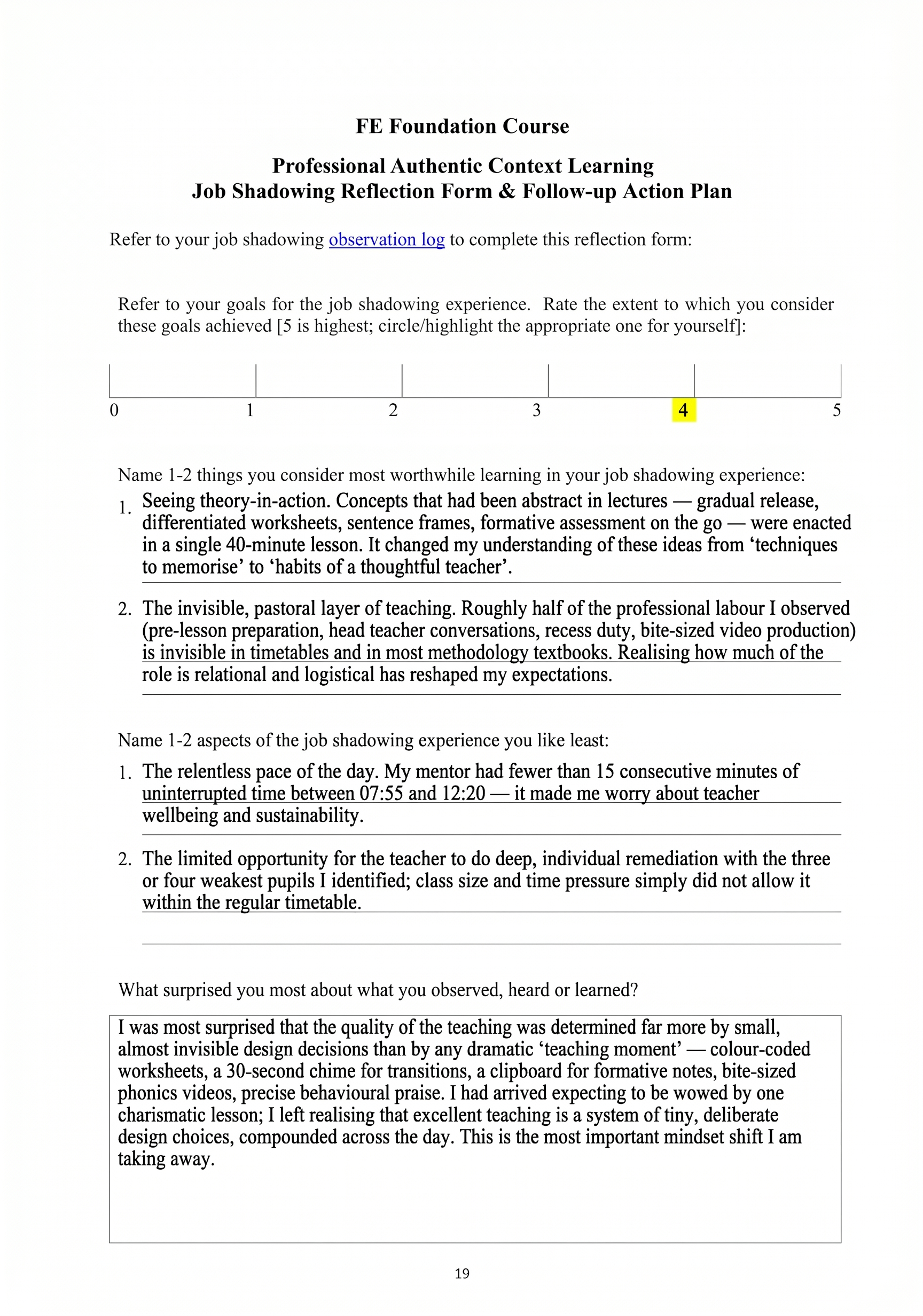
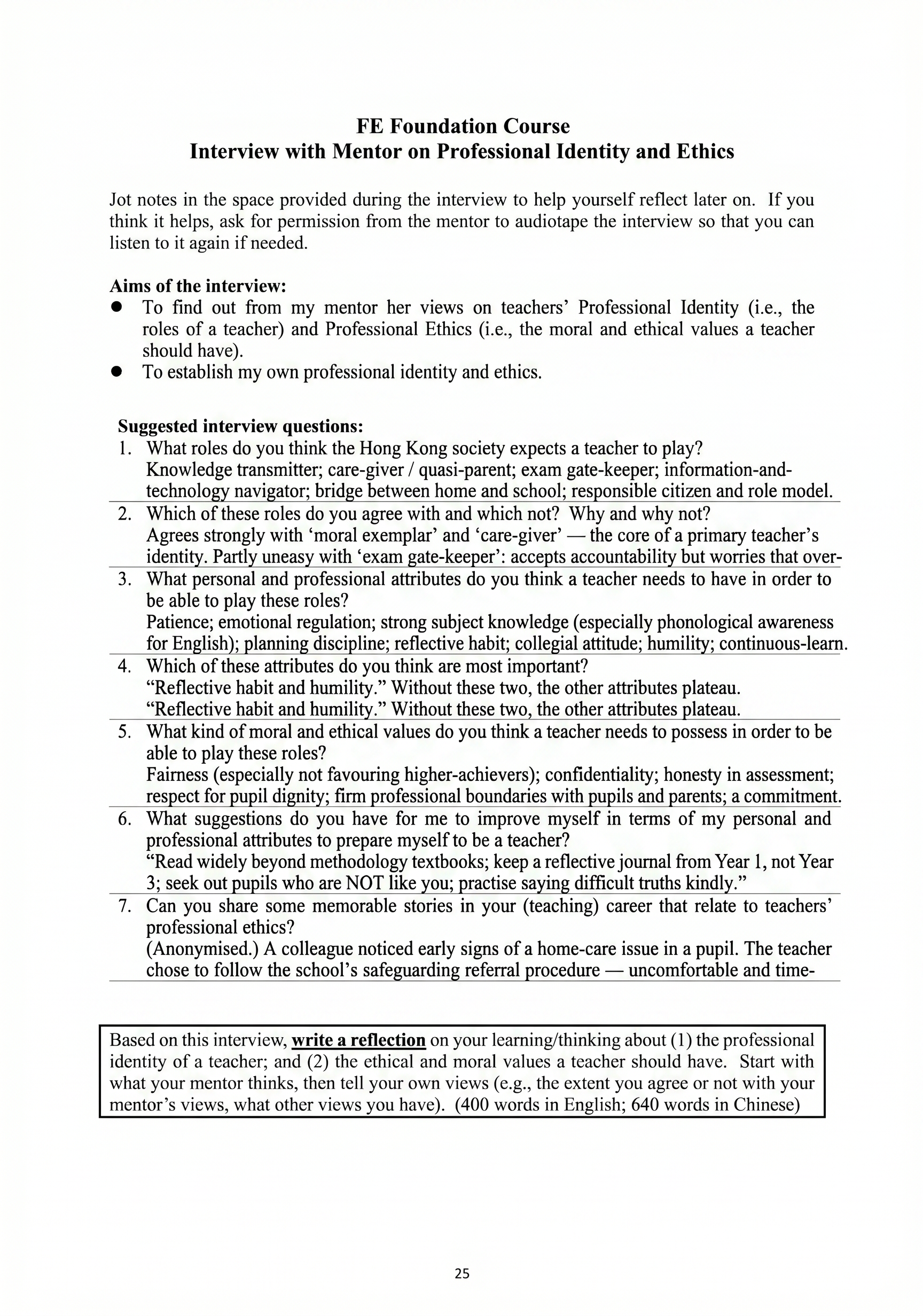
My mentor's interview reframed my understanding of professional identity: she identified knowledge transmitter, moral exemplar, and care-giver as core roles, yet kept critical distance from "exam gate-keeper" and "quasi-parent," insisting on firm boundaries. I agree these three are foundational, but I add a fourth: designer of learning environments (Bruner, 1960) — because my shadowing revealed that excellent teaching hinges on intentional micro-designs (colour-coded worksheets, transition signals, deliberate seating) that deserve professional recognition and now directly inform my lesson planning.
I nevertheless problematise the gate-keeper tension further. Her unease echoes Ball's (2003) critique of performativity, yet I question whether one can truly reject this role in Hong Kong's hyper-competitive system. Perhaps the more ethical stance is subversion from within: prioritising learning processes over ranking. Regarding the quasi-parent role, I respect her caution but, for disadvantaged pupils, the teacher is often a rare consistent carer. The answer, I argue, is not retreat but professionalised care through safeguarding systems and collegial support (Noddings, 2005) — knowledge of safeguarding protocols (EDB, 2022) and phonological awareness (Snow et al., 1998) now anchors my pastoral and instructional decisions.
Her ethical compass — fairness, confidentiality, assessment honesty, pupil dignity, commitment to every child — is compelling. I fully endorse these and add epistemic honesty: in an AI era, teachers must model intellectual humility and openly acknowledge the boundaries of their own knowledge. Her emphasis on fairness also pushes me beyond equal treatment towards equity, aligning with Cochran-Smith's (2004) call to challenge structural inequalities. Her safeguarding story reframed ethics as institutional fidelity, not heroism, yet I question — through Kohlberg's (1981) moral stages — whether rigid rule-following is always sufficient. There are moments when organisational protocols are inadequate, and moral courage demands bending them for the child's welfare — a tension I will navigate within a professional learning community of trusted, critically-minded peers.
This interview also clarified the attitudes needed to learn in such communities. My mentor modelled rigorous collaborative professionalism (Hargreaves & O'Connor, 2018): collegiality grounded in resource-sharing and collective problem-framing. Openness to feedback requires intellectual humility and a willingness to make practice vulnerable. I commit to contributing actively to collaborative planning and lesson study, using Gibbs' Reflective Cycle (1988) to ground my sharing in evidence, not anecdote. Yet I recognise communities can stifle dissent; thus, both offering and receiving constructive critique are essential skills I must hone.
My emerging identity is a reflective, ethically complex practitioner committed to care, justice, and collaborative interrogation of the tensions that define our work — and the children we ultimately serve.
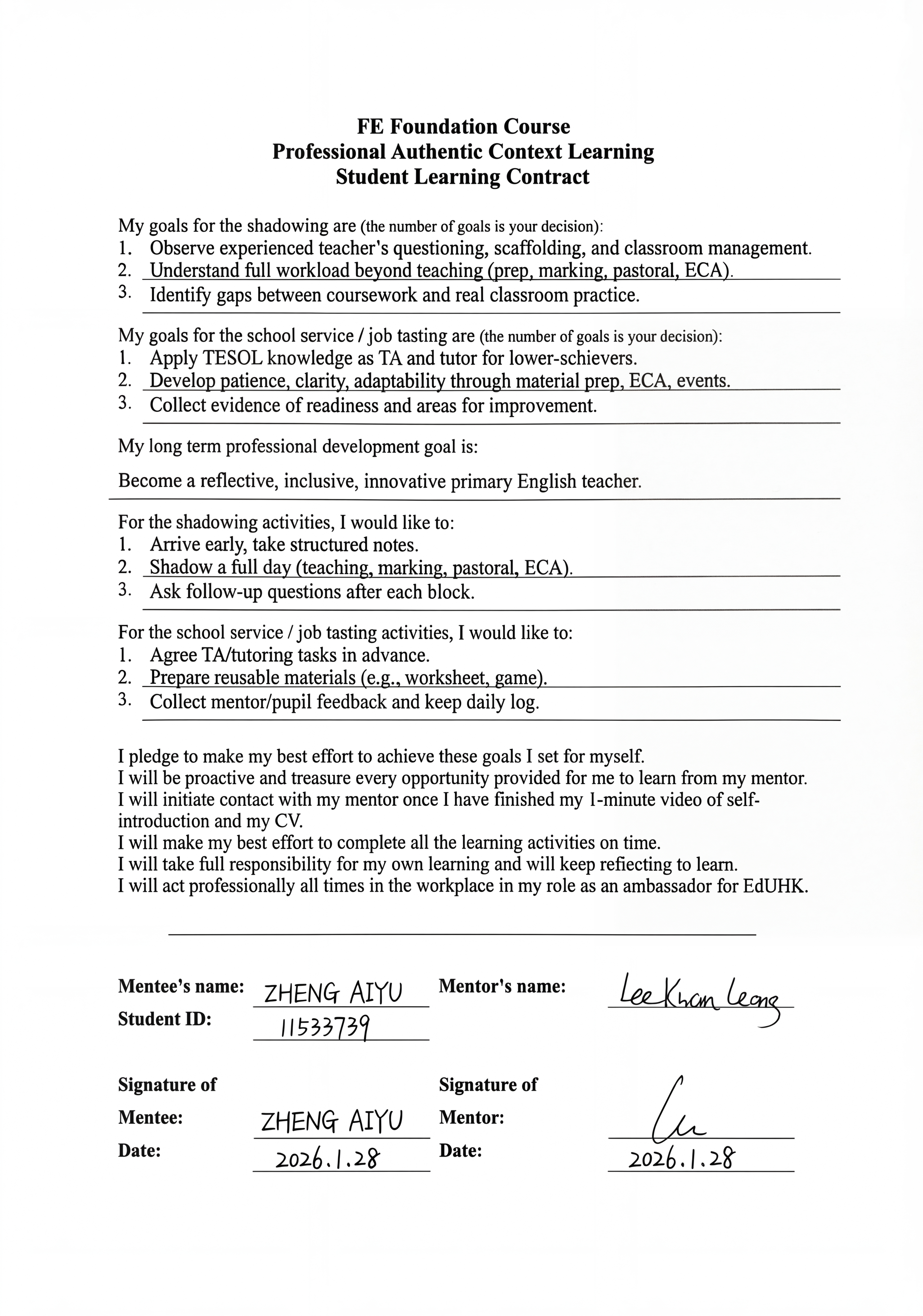
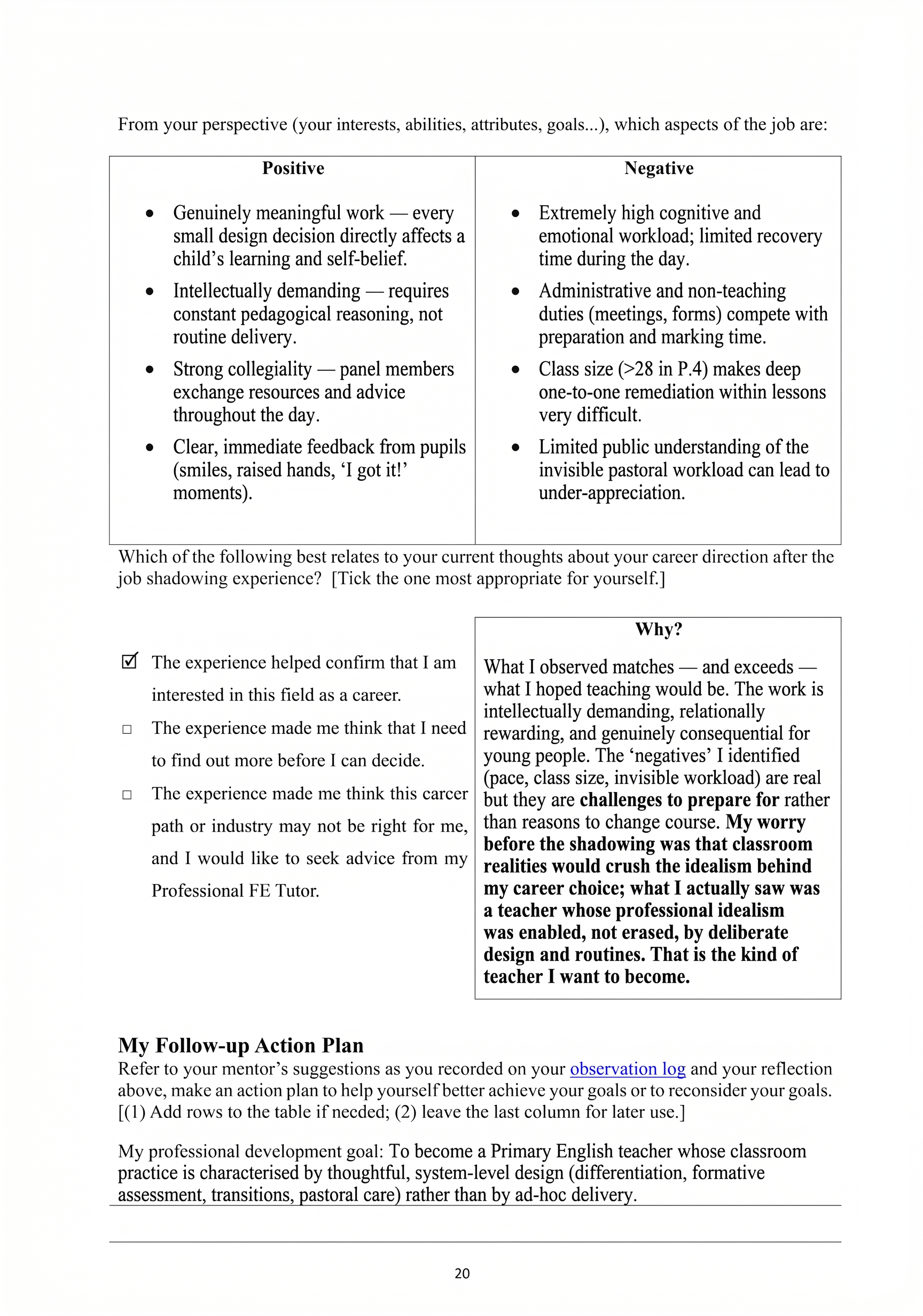
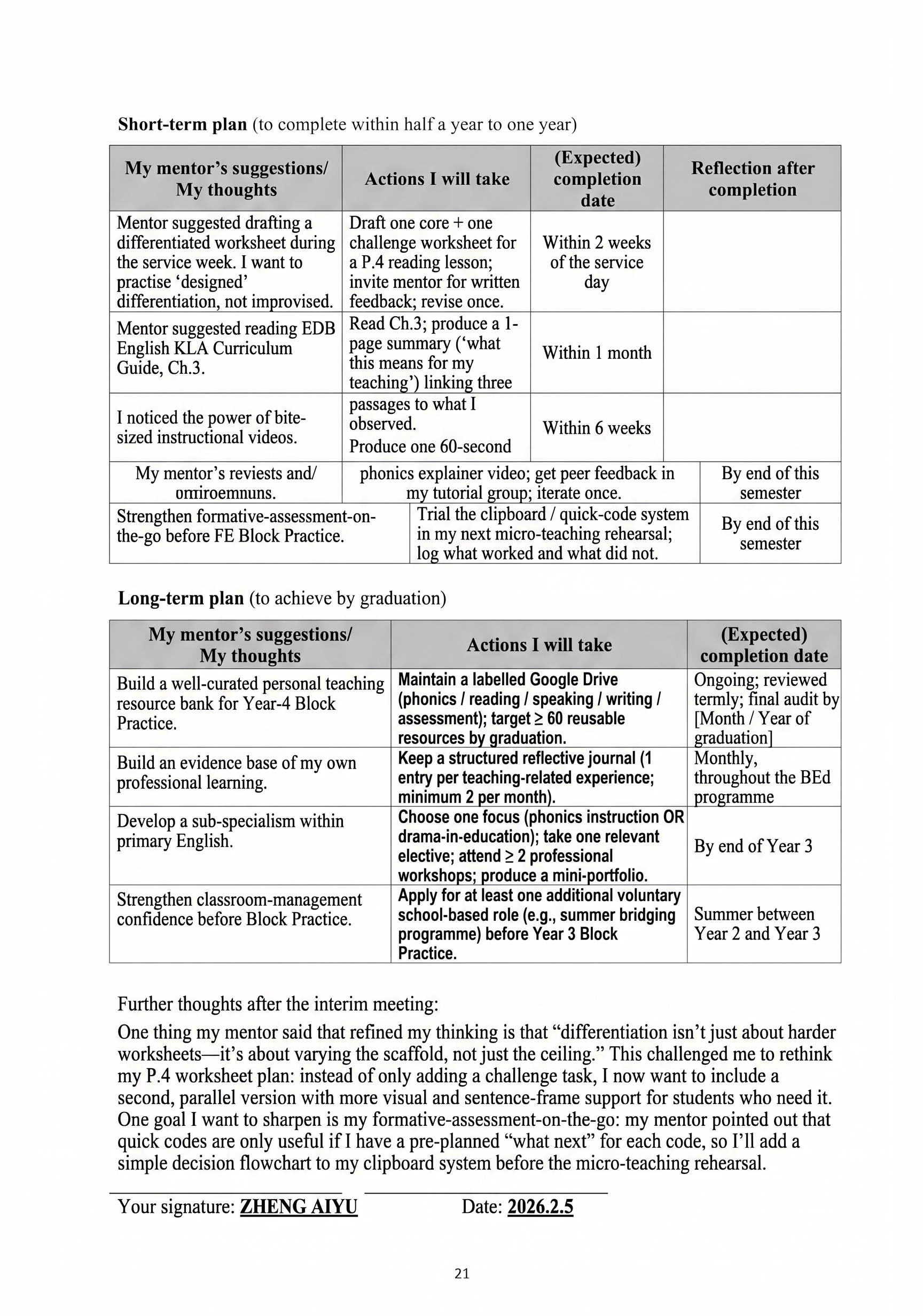
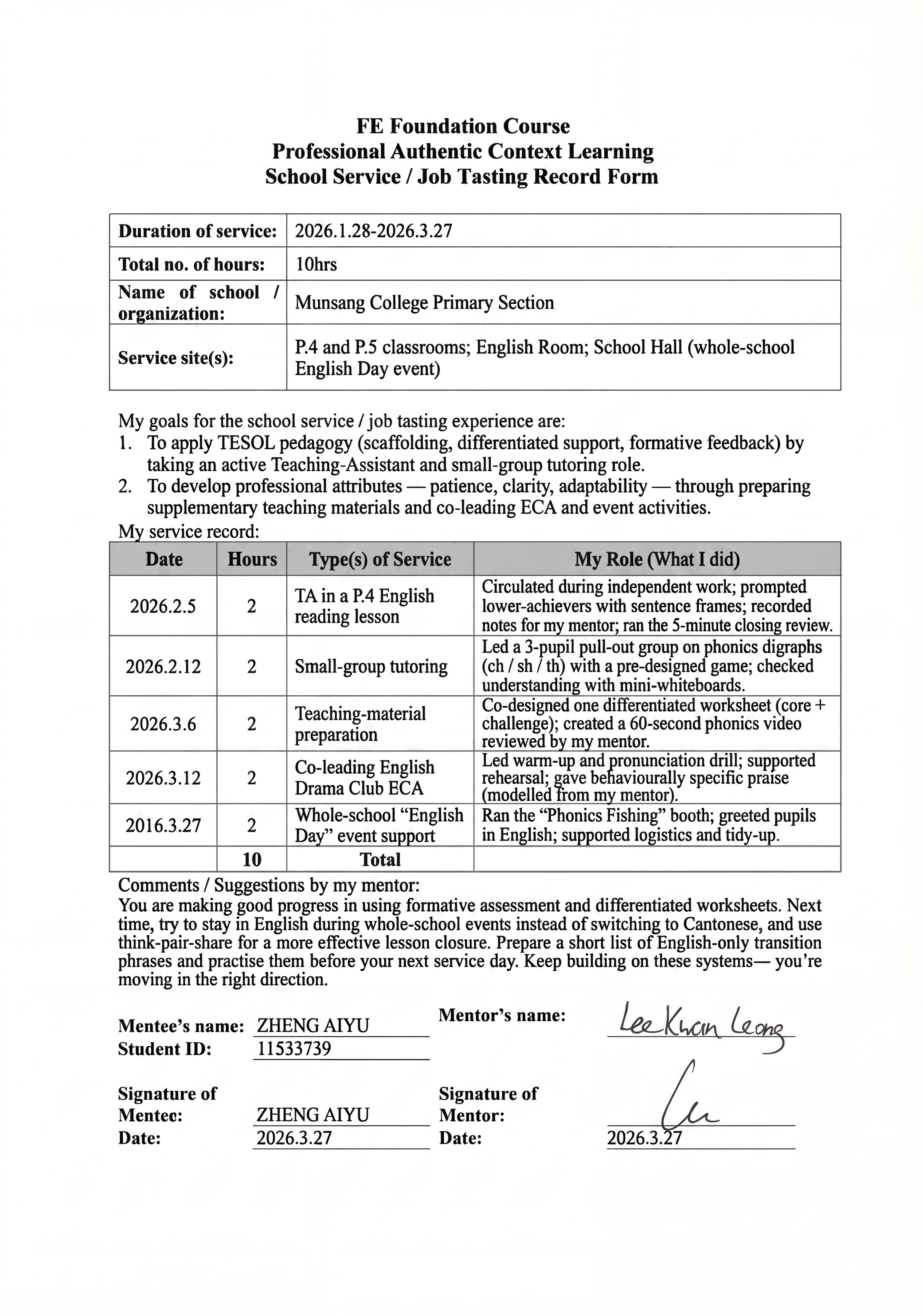
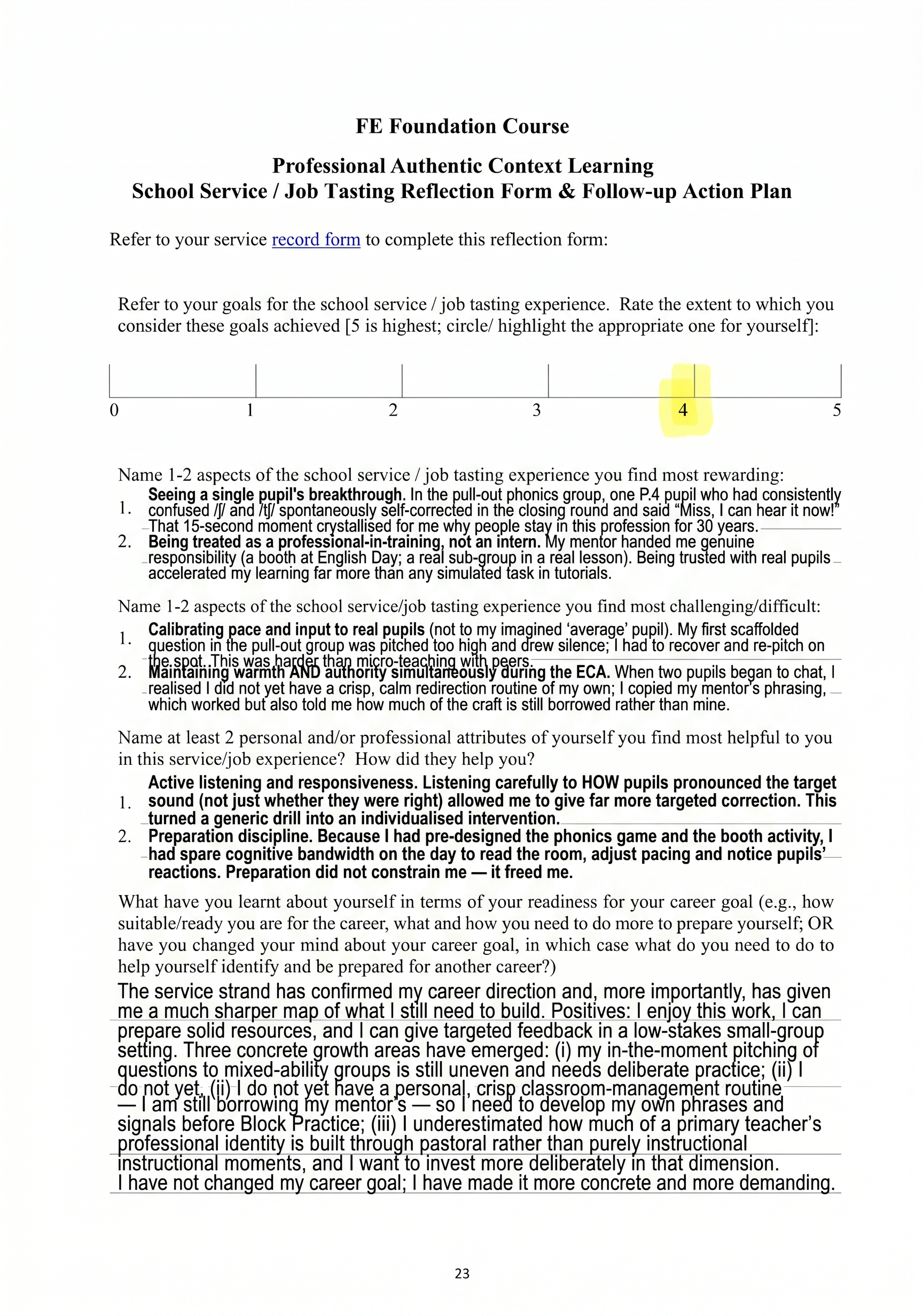
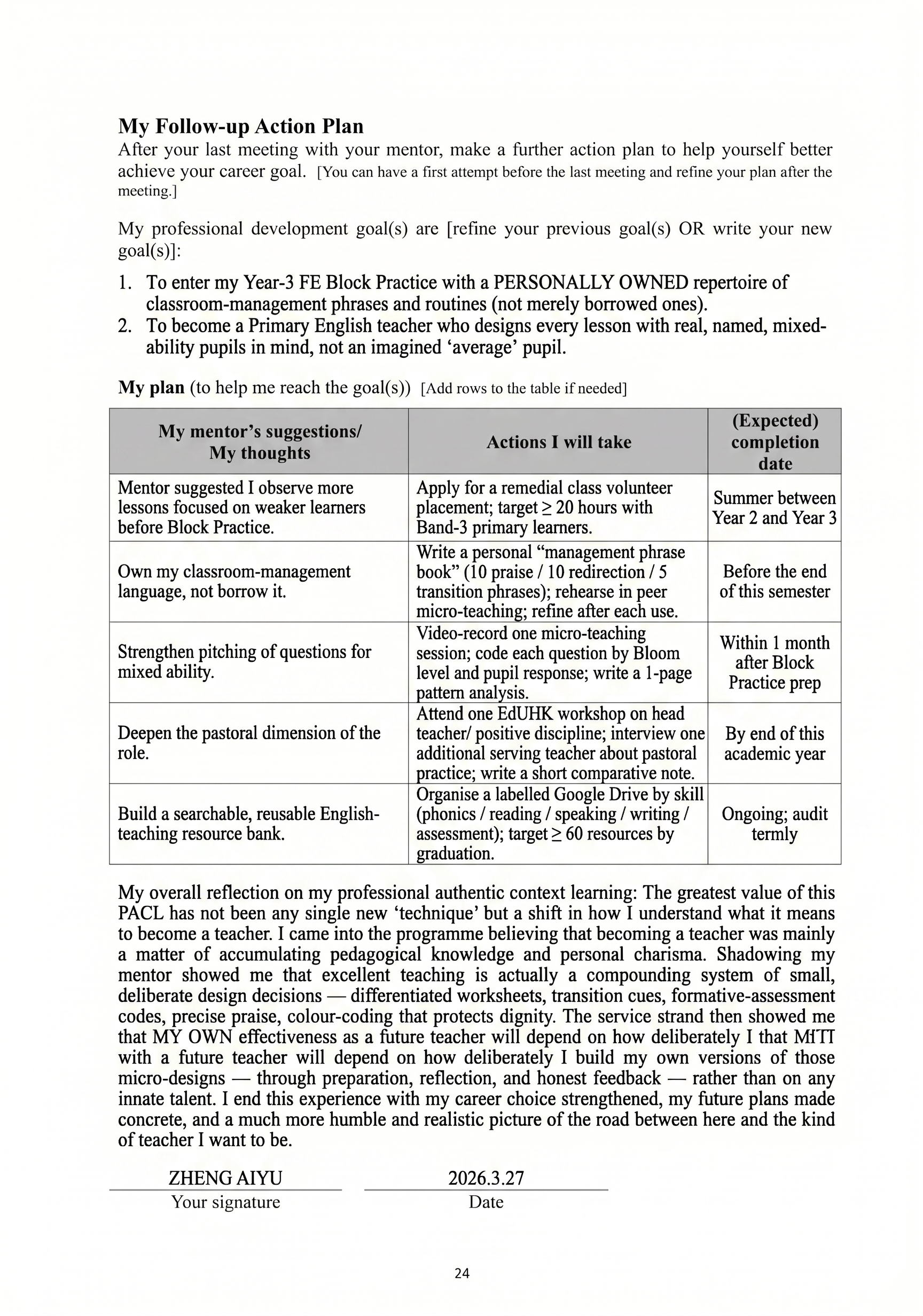
A complete record of the ten signed forms submitted across the eight-week Professional Authentic Context Learning programme — from the initial Mentorship Scheme contract to the final Reflection & Action Plan. Click any document to view in full size.
Every citation that appears across Parts A–D, formatted to APA 7th edition standards. Books and reports are italicised; journal volumes and titles follow the official APA conventions.
The 14-slide deck I delivered in the interim meeting and PACL sharing sessions, answering the prompt "Who am I as a teacher?" — a 10-minute reflective walk through COTAP self-audit, mentor interview, ethical extensions, and the four-part identity I now claim.
Narrative arc from The Question to My Mission in One Sentence: COTAP self-audit, six-row "Day in the Life" shadowing log, the conceptual shift toward environment design, the four-role identity (knowledge transmitter · moral exemplar · care-giver · designer of learning environments), three concrete commitments closing the gap toward Committed Role Model of Professionalism, and a closing 11-word mission statement.
Recorded inside the classroom during an English lesson in my service hours at Munsang College Primary Section, this brief clip evidences the kind of warm, attentive, and reciprocally respectful teaching atmosphere my mentor cultivates with her pupils. Their voices reflect curiosity rather than compliance — students initiating questions, the teacher listening before answering, a quietly engaged learning rhythm punctuating the exchange. It is precisely this everyday ethic of care (Noddings, 2005) that my Part D reflection identifies as the heartbeat of a Caring Cultivator: audible field evidence of the safe, dignified, dialogic in-class climate behind my written analysis.
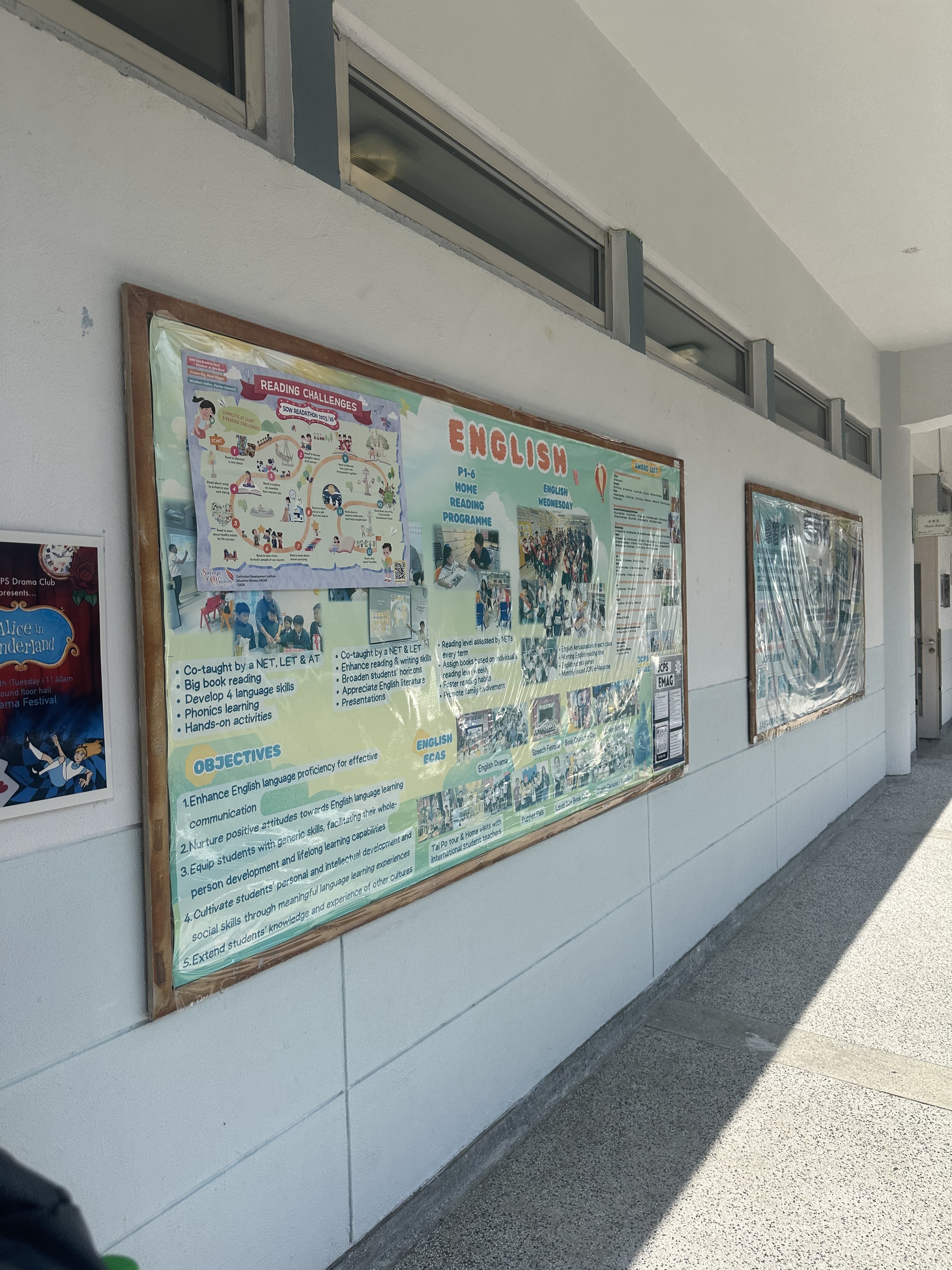
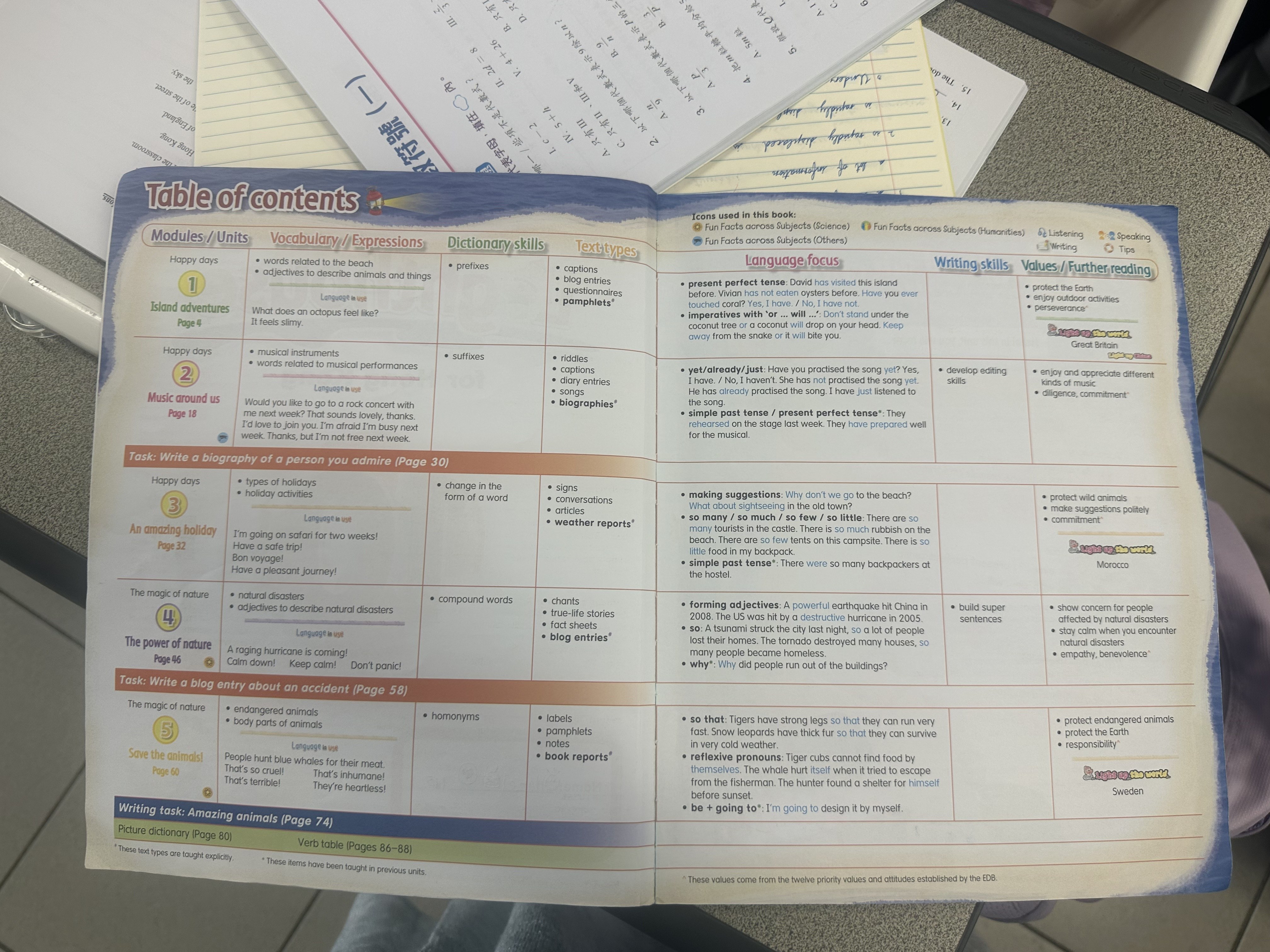
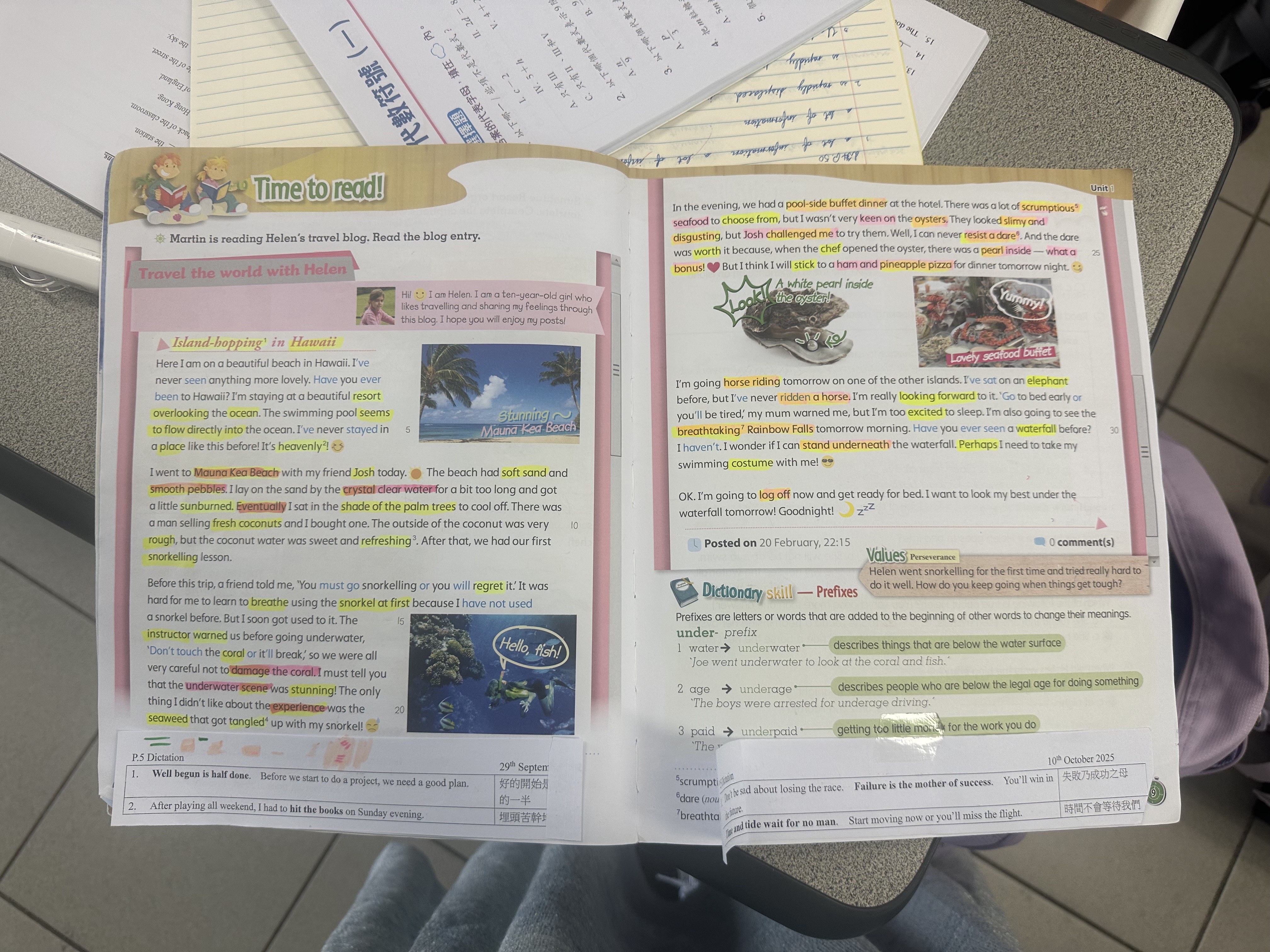
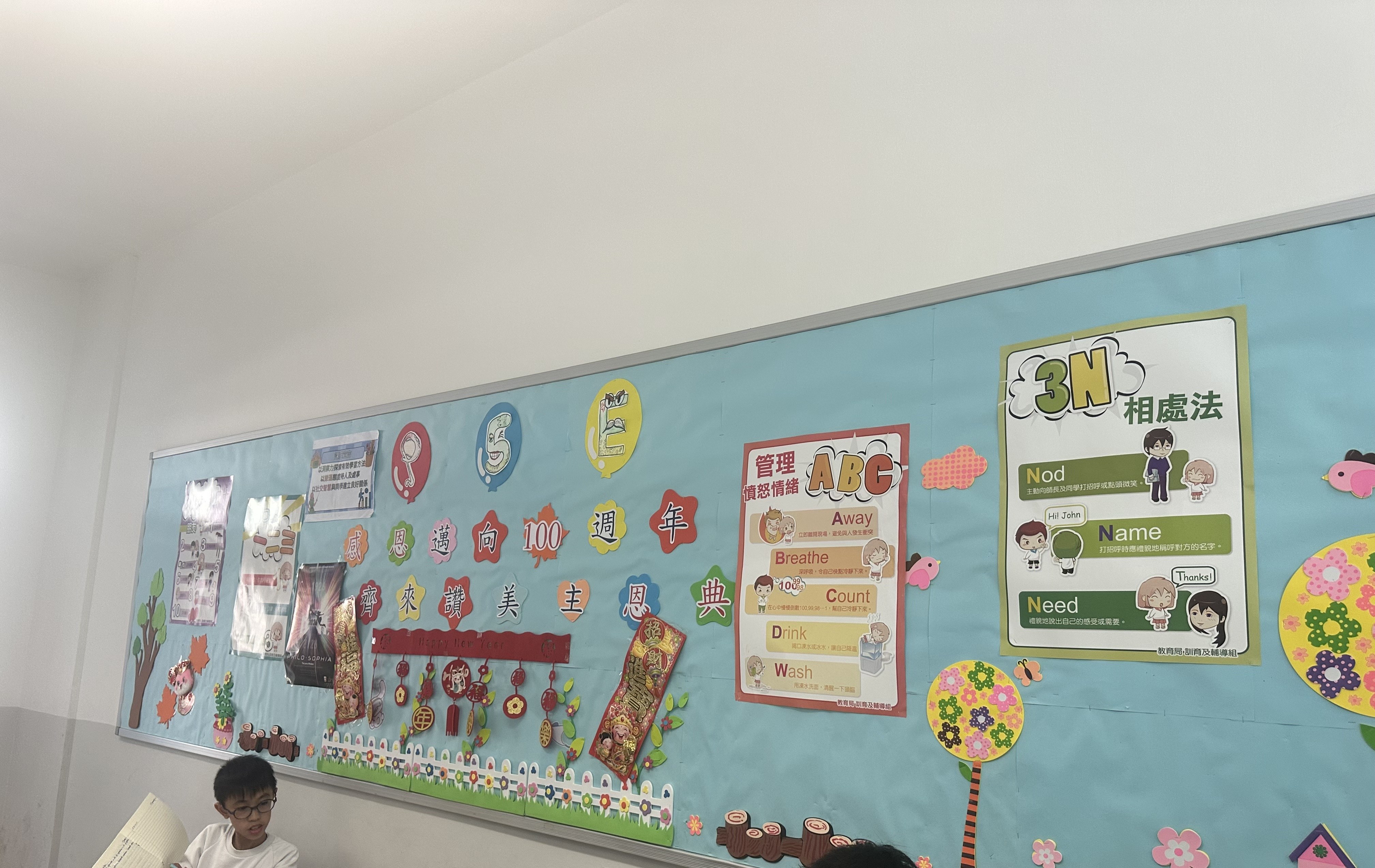
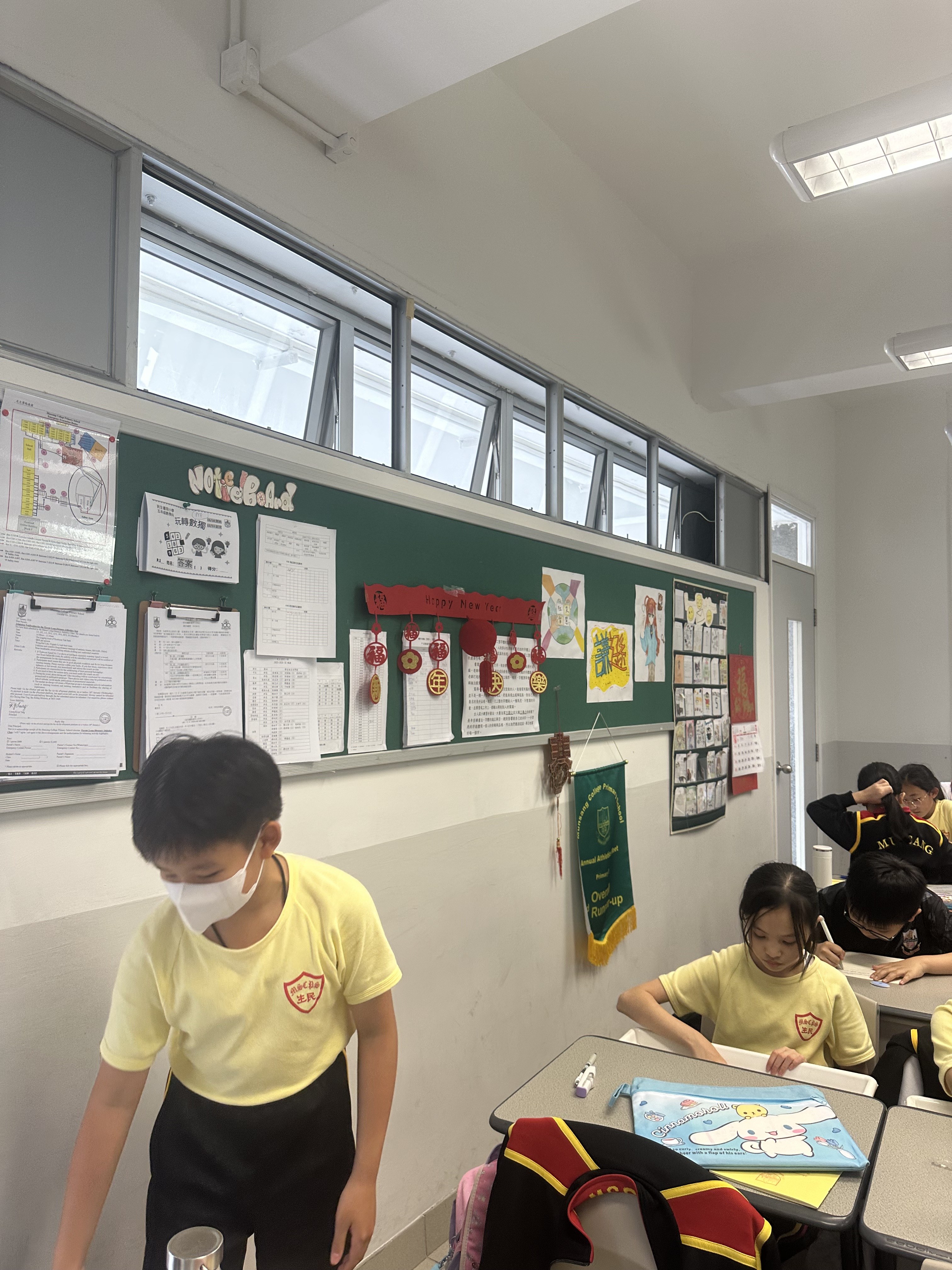
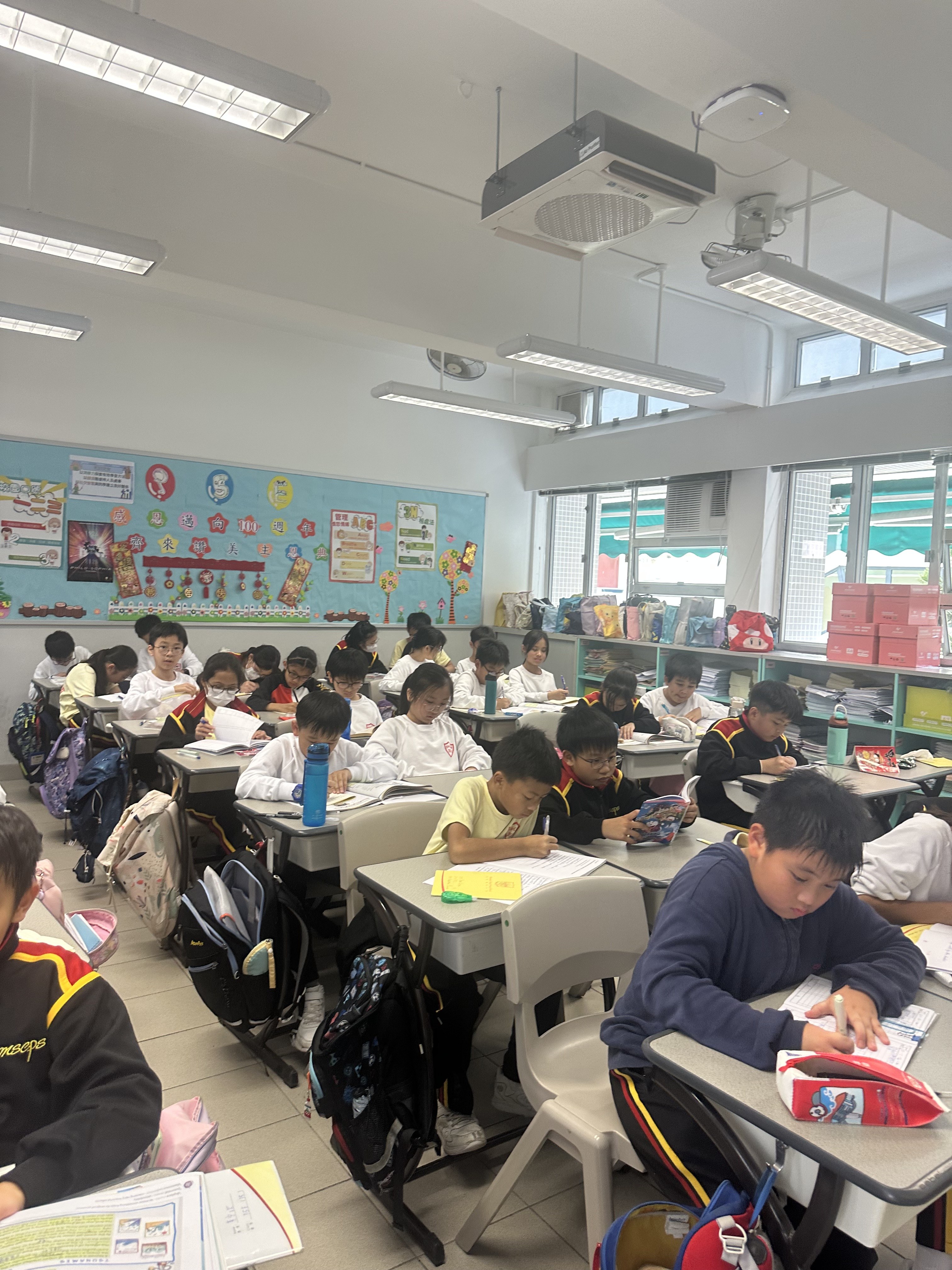
Eleven photographs taken during shadowing and service at Munsang College Primary Section, organised into four thematic categories that visually evidence the lived professional context behind the written reflections above.
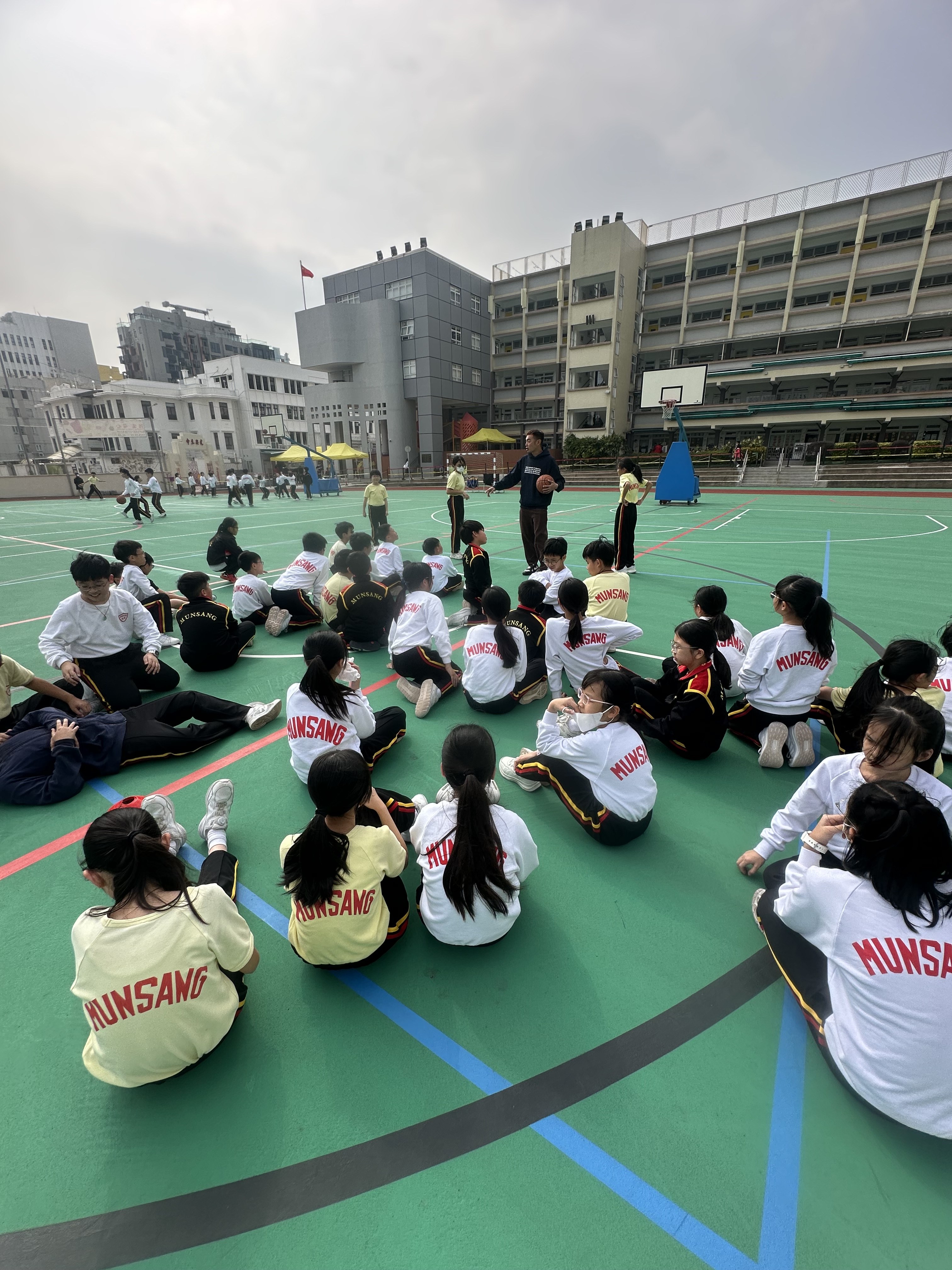
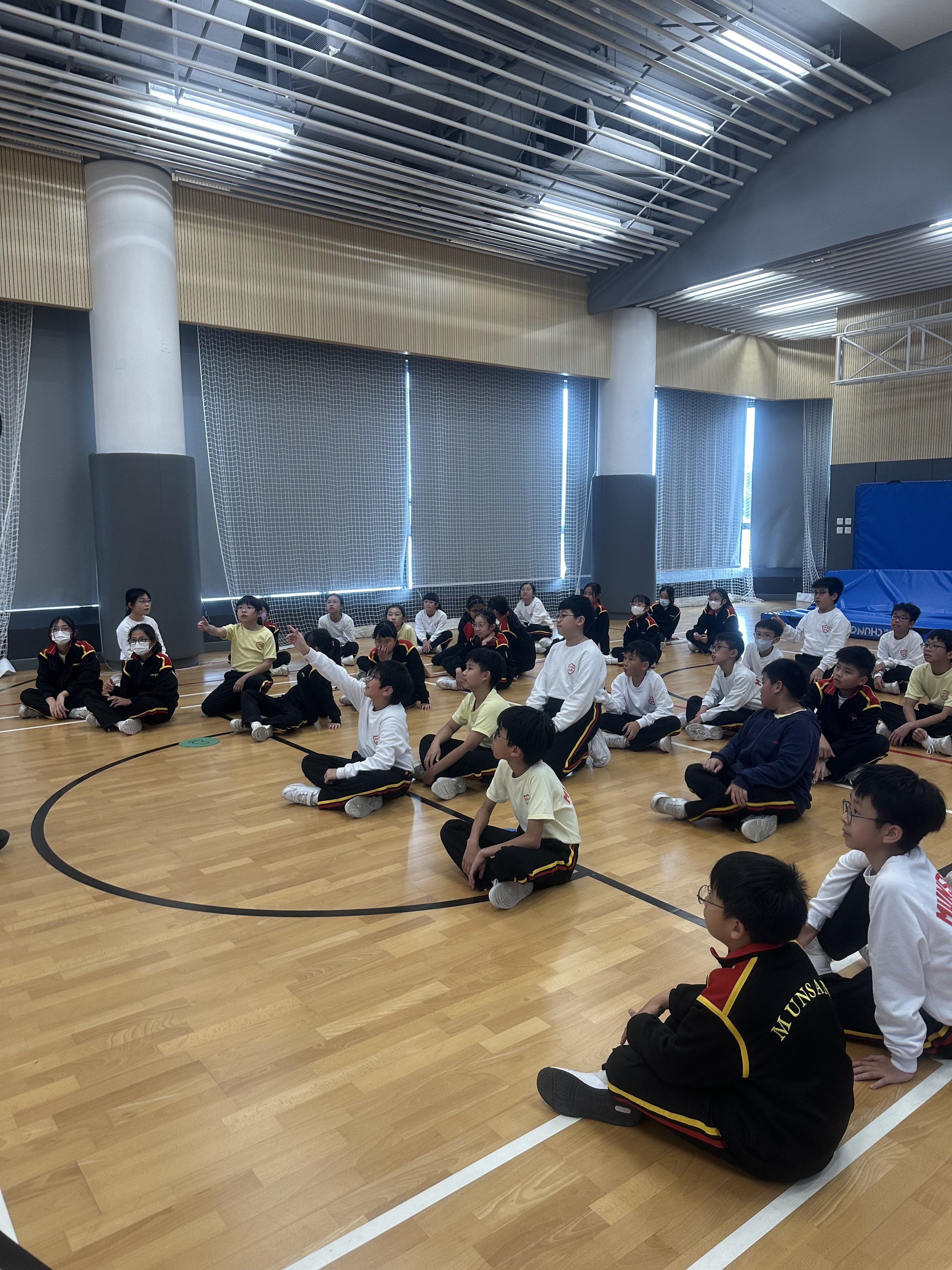
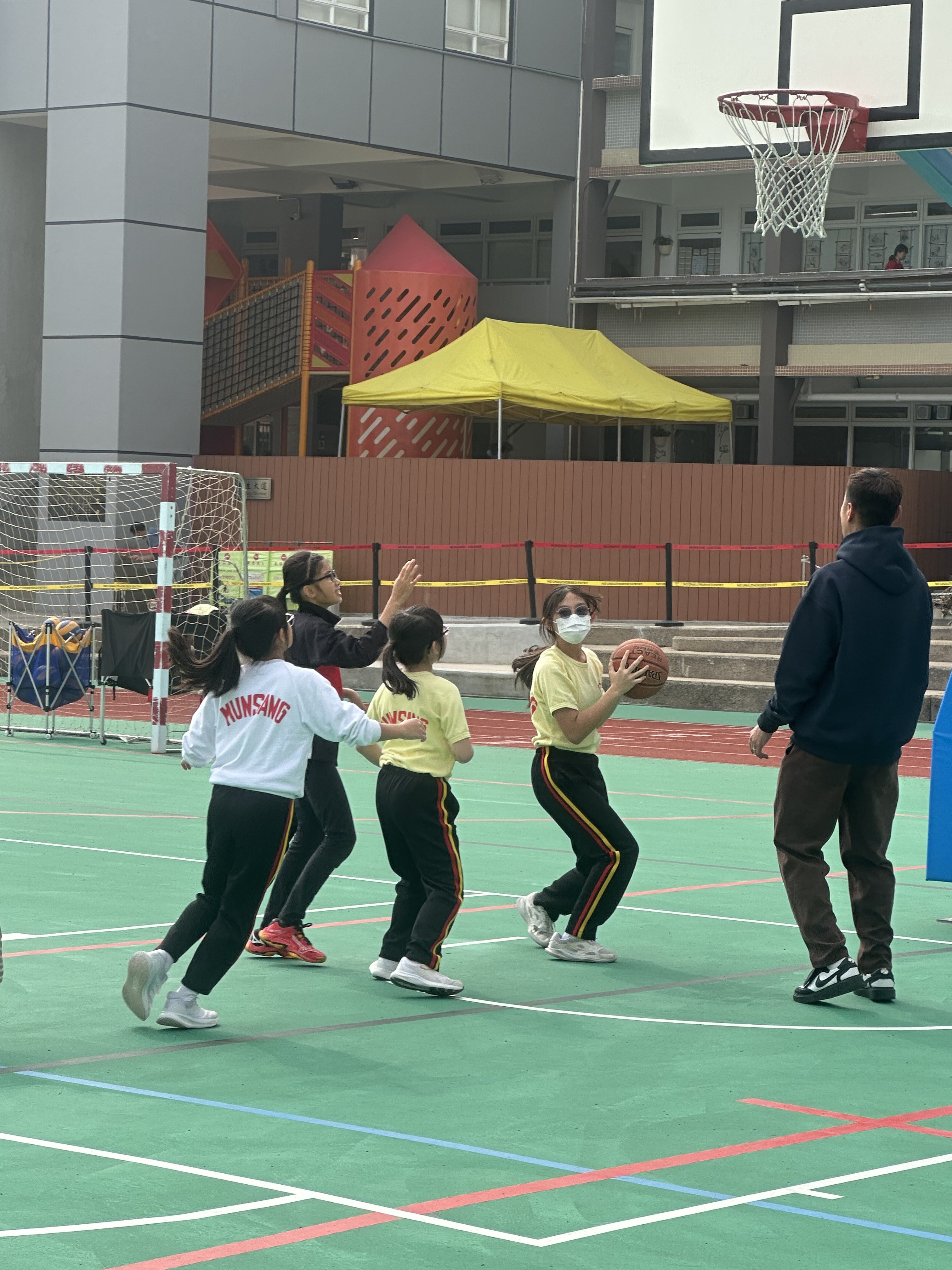
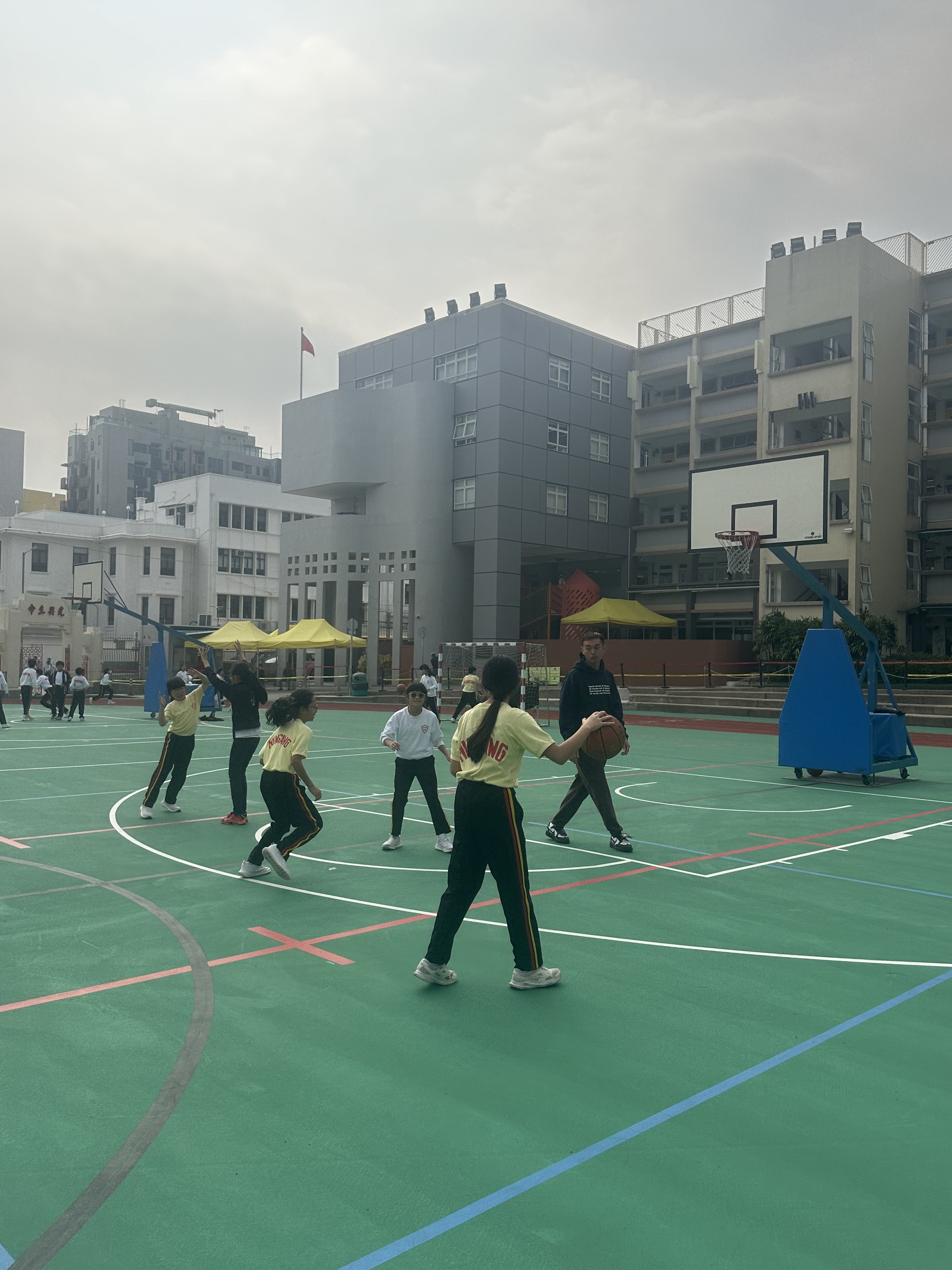
Whole-cohort PE gathering, indoor gymnasium roll-call and basketball training in the school playground


Whole-school English Reading Programme display, mentor's English textbook table-of-contents and in-class reading materials


Classroom display board (100th Anniversary, "Anger Management ABC" and "3N" interpersonal-skills posters), homeroom learning life and pupil-prepared notice walls


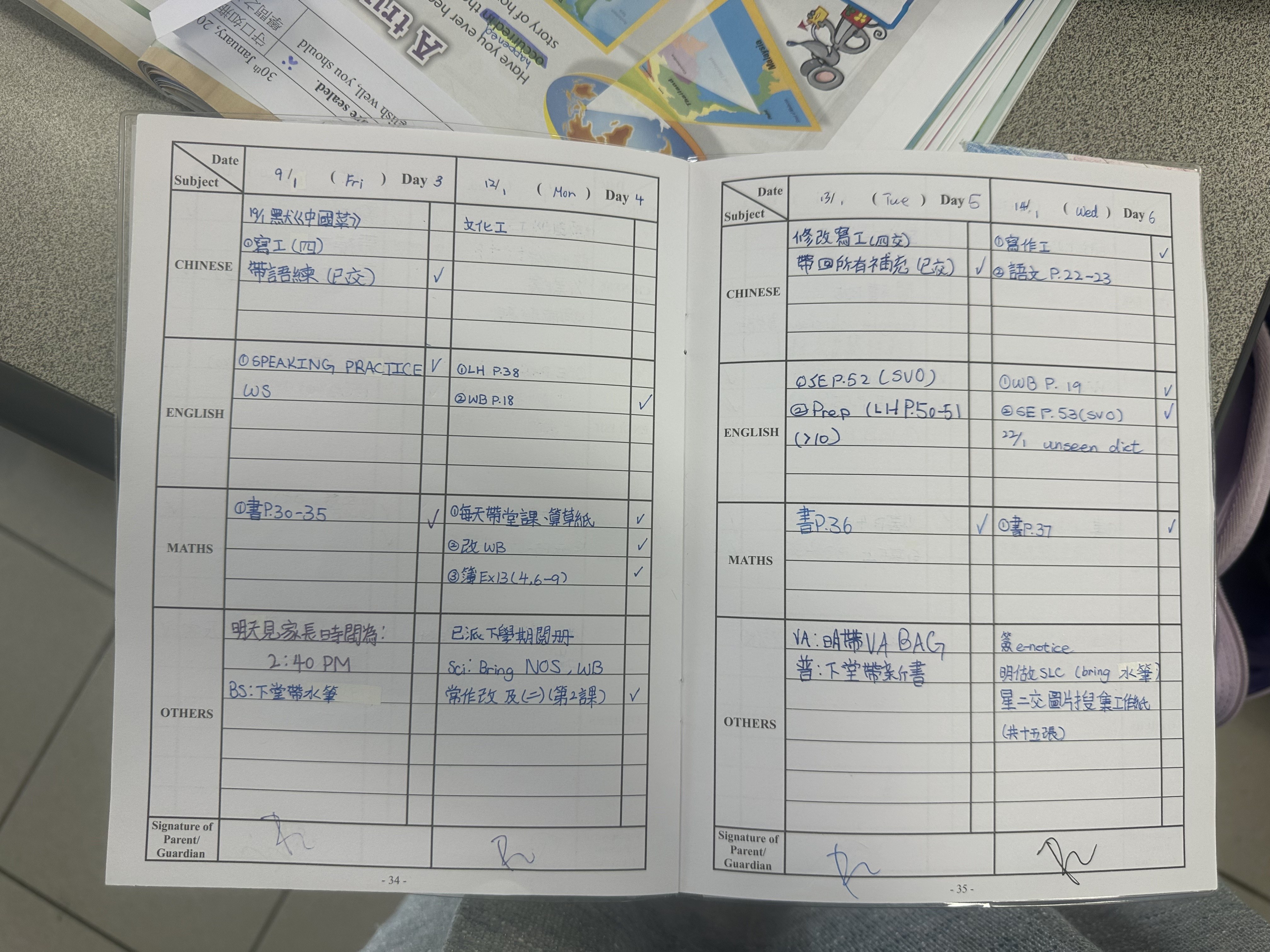
Pupil homework handbook showing differentiated daily assignments across Chinese, English, Maths & Others, with parent/guardian counter-signature